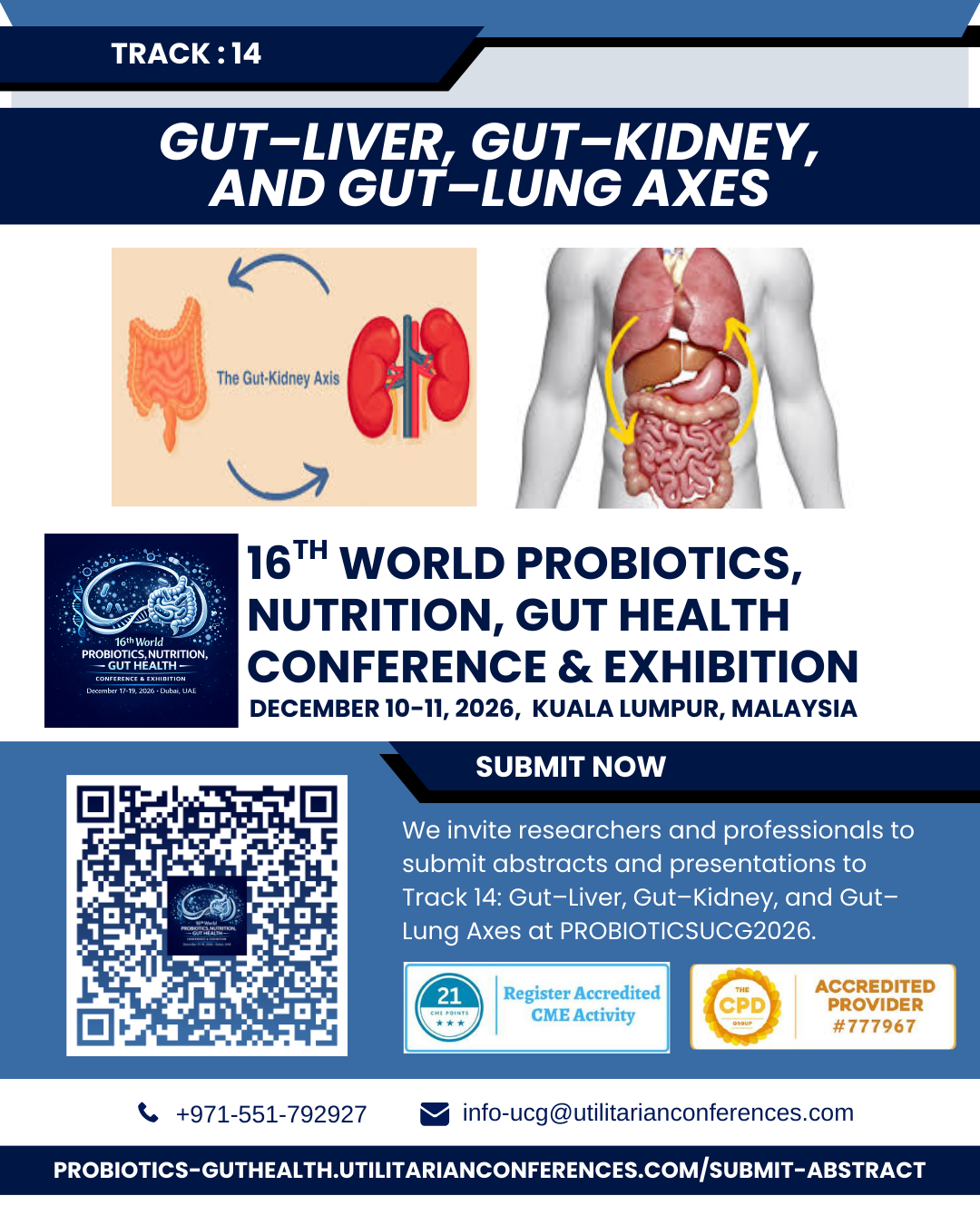
Track 14: Gut–Liver, Gut–Kidney, and Gut–Lung Axis
The gut communicates with multiple organs through specialized axes, including the gut–liver, gut–kidney, and gut–lung axes. These bidirectional pathways involve microbial metabolites, immune signaling, and neural communication, linking gut health to systemic organ function. Disruptions in these axes are associated with metabolic, inflammatory, and infectious diseases, highlighting the importance of maintaining a balanced gut microbiome.
Gut–Liver Axis The gut–liver axis refers to the communication between the intestinal tract and the liver via the portal vein and immune signaling. Gut microbiota influence bile acid metabolism, lipid regulation, and hepatic immune responses. Dysbiosis can contribute to liver disorders such as non-alcoholic fatty liver disease (NAFLD), hepatitis, and cirrhosis by promoting inflammation and endotoxin translocation.
Gut–Kidney Axis The gut–kidney axis describes the relationship between intestinal microbiota and renal function. Microbial metabolites, including uremic toxins, impact kidney health. Dysbiosis is linked to chronic kidney disease (CKD) progression, hypertension, and impaired renal metabolism. Modulating gut microbiota with probiotics, prebiotics, or dietary interventions may help reduce toxin load and support kidney function.
Gut–Lung Axis The gut–lung axis illustrates the connection between gut microbiota and respiratory health. Microbial metabolites and immune mediators influence lung immunity, inflammation, and susceptibility to infections. Altered gut microbiota has been associated with asthma, chronic obstructive pulmonary disease (COPD), and respiratory infections. Maintaining a healthy gut may improve pulmonary immune responses and reduce disease severity.
Conclusion The gut–liver, gut–kidney, and gut–lung axes underscore the systemic impact of gut microbiota on organ health. Understanding these interconnected pathways opens opportunities for microbiome-targeted interventions, including probiotics, prebiotics, and diet-based strategies, to support overall health and prevent organ-specific diseases.